
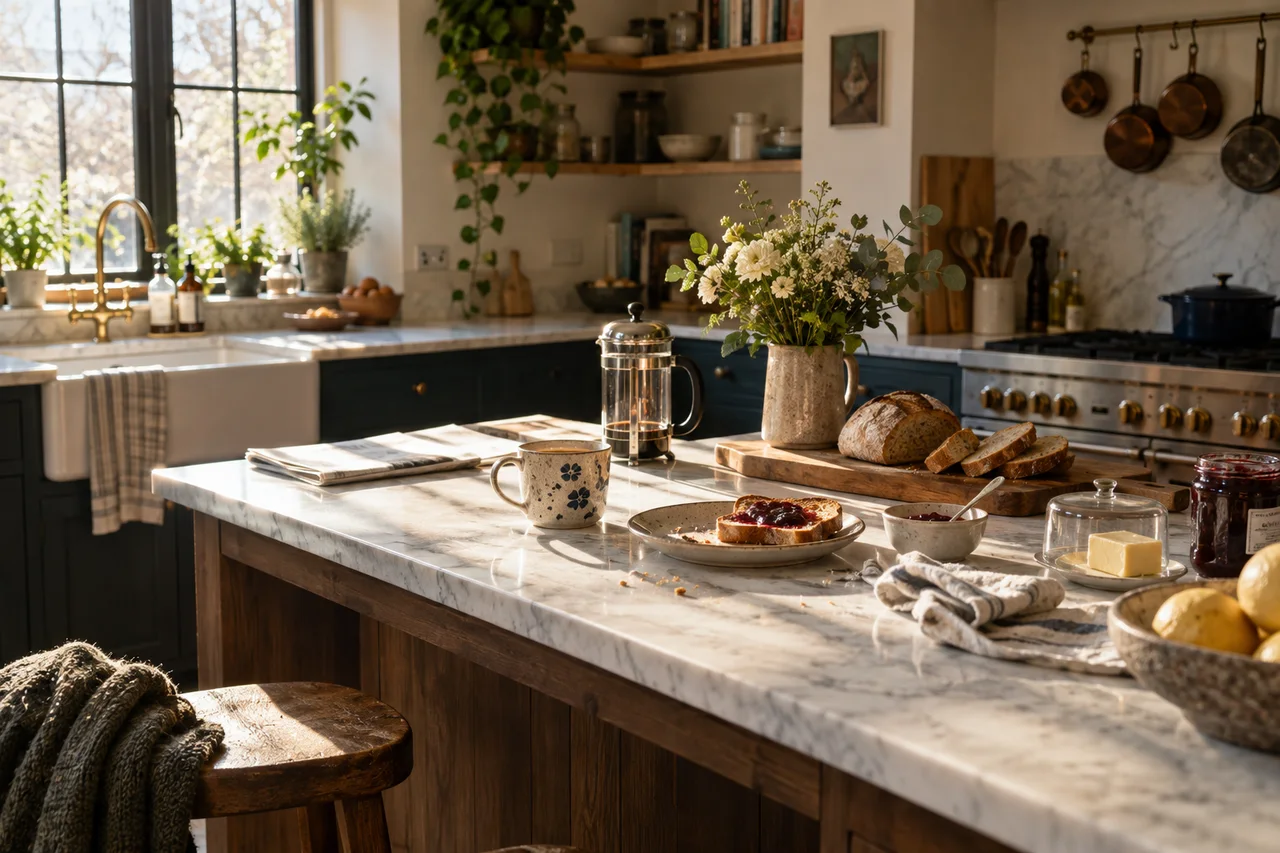
The mug on the draining board
At 7.42 on Friday evening, Nina stood in her kitchen holding a mug she had no intention of washing. Rain ticked against the window. Her coat was still on. Somewhere in the bag at her feet, her phone was vibrating with a conversation she had already left twice.
The mug was not the problem. She knew that. It was one mug, carrying the evidence of one coffee, in a London flat occupied by one reasonably capable adult. There were no mountains of washing-up. The cushions were straight. The recycling had gone out that morning.
But the kitchen felt sticky around the edges. The strip beside the hob caught the light. A grey line followed the skirting board into the hall. In the bathroom, the shower screen had acquired a permanent-looking fog, as though the room were refusing to wake up.
Nina put the mug down harder than she meant to. Then she apologised to it. It had been that sort of week.
On Sunday her sister was coming for lunch. Not an inspection, although Nina had begun to prepare for it like one. There was a supermarket order to place, a table to clear and a loose plan to do something elaborate with aubergines. The flat, apparently, had also booked itself into her weekend.
A Saturday spent looking busy
By ten the next morning, she had folded the throw, moved three letters into a drawer and carried a pair of shoes from the bedroom to the hall, then back again. The flat was becoming tidier in a way that produced no particular satisfaction.
She wiped the worktop. It looked better until the sun came out. That narrow, accusing light showed the greasy cupboard handles and the dusty ledge above the doorway. She remembered noticing the ledge the previous month. Possibly the month before that. Time in a busy flat was measured partly by jobs that kept their place on the list.
Her sister called to ask whether she should bring anything. Nina said dessert, then complained about the kitchen. “I keep cleaning it,” she said. “It just never seems to get clean.” There was a pause. Her sister asked what she meant by cleaning.
This was irritating, partly because it was a fair question. Nina meant dishes, crumbs, the obvious spill. She meant making the place presentable between work and sleep. She did not mean the cupboard fronts, the floor edges or the bathroom details she postponed because each seemed to require its own small campaign.
The problem was not that she had been doing nothing. She had been doing the same things repeatedly, while a different set of things waited. More effort applied to the first list was not making the second one disappear.
The room she stopped apologising for
The following week, when she enquired about a deep clean, Nina began with an apology. The cleaner who came to look at the work asked her to show the areas that bothered her. Not to explain why they had got that way. Just to show them.
That changed the conversation. Nina pointed to the cupboard fronts and the shower screen. They discussed the finishes, what was accessible and what would need separate attention. The oven was not quietly added to an already crowded visit. Neither was the mark on the worktop promised away. Some marks, she was told, might be wear rather than dirt.
They also asked whether the cupboards would be empty and which appliances Nina wanted included. Moving heavy furniture, cleaning inside an oven and treating delicate surfaces were different jobs, not invisible extras hidden inside the word “deep”. Nina had expected to choose a number of hours. Instead, she was choosing what those hours were for.
It was a less spectacular conversation than the transformation videos she sometimes watched on the train. Nobody promised that her flat would become another flat. The work had edges. For once, so did her expectations.
On the morning of the visit, Nina cleared the surfaces and put her papers in the bedroom. She caught herself reaching for a cloth, laughed, and left it in the sink. Then she went out for breakfast without a laptop, an act that felt almost administratively irresponsible.
When she returned, the first thing she noticed was the light. It fell across the cupboard fronts without making her mentally schedule a task. The bathroom looked like a bathroom again, not an unfinished argument. The worn patch on the worktop remained. Strangely, now that she knew what it was, it bothered her less.
A place to sit down
No one had rescued Nina from a domestic catastrophe. There had been no catastrophe. That was what made the arrangement easy to dismiss beforehand: surely a competent person could manage a small flat. She managed contracts at work. She managed train disruptions, birthdays and the family group chat. Why should a kitchen defeat her?
But competence had become a habit of accepting every task that presented itself. The cleaner had not sold her a different personality or a permanently perfect home. Someone had simply taken responsibility for a defined piece of work, including the awkward details Nina kept carrying from one weekend into the next.
They discussed a regular visit for the everyday upkeep. It would not include every possible task, and Nina would still make toast, spill coffee and leave shoes in the wrong room. What changed was the starting point. Keeping up would no longer mean trying to recover ground at the same time.
Her sister came the following Sunday. The aubergines were slightly overdone. They ate them anyway, with bread, and talked until the light moved off the table. At some point Nina realised she had not spent the meal looking past her guest at things she wanted to hide.
Afterwards she carried the plates into the kitchen. One mug remained on the draining board. On Sunday evening, she left it where it was. This time, it was just a mug.
Editorial note
- About this story An illustrative fictional story: the characters, dialogue and events are invented, not a documented Perfect Living customer case or evidence of savings. The photograph illustrates the subject and does not show the fictional property.