
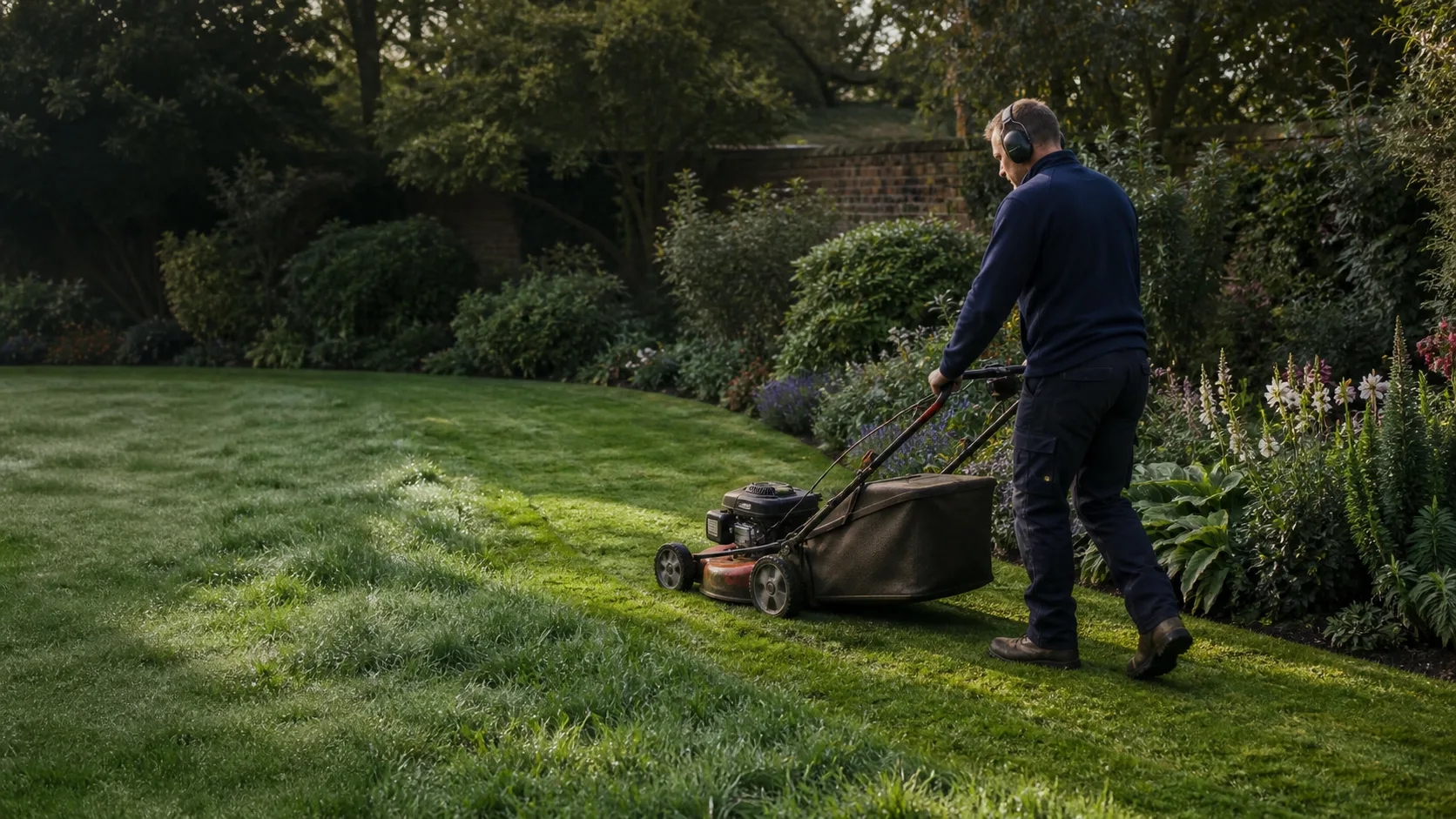
What mowing can and cannot do for a lawn
Mowing is a maintenance task, not a cure-all. A clean cut helps a lawn look tidy, stops grass from becoming leggy and can encourage a more even surface over time. But mowing does not repair compaction, poor drainage, bare patches, nutrient imbalance or shade problems. If those issues are present, the cut may look acceptable for a few days and still leave the turf weaker than before.
That is why lawn care UK work is better understood as a sequence of decisions. The cut height, the timing of the visit, the state of the soil, recent rainfall and the season all influence the result. A lawn mowing service can maintain appearance, but gardener lawn maintenance usually has to consider how each visit affects recovery, growth and the next round of care.
When to mow grass, and why timing matters
The question of when to mow grass is less about a fixed calendar date and more about conditions. Grass grows in response to temperature, moisture and light, so the same garden may need a cut at different intervals as the year changes. In a wet, mild spell the lawn can surge; in dry or cold periods it may slow enough that a frequent cut does more harm than good.
Timing also affects finish. Wet grass can tear instead of cut cleanly, clump on the surface and smear across paving. Very dry grass can be brittle and stressed, especially if it has already been cut too short. A thoughtful gardener looks at the state of the turf and the forecast rather than simply following habit. That judgement matters just as much as the machine used.
- Check whether the grass is dry enough to cut cleanly, not just short enough to fit a routine.
- Avoid forcing a cut when the lawn is growing slowly or showing stress.
- Treat the season and recent weather as part of the decision, not background noise.
Mowing height and lawn health
Cutting height shapes how a lawn behaves after the mower leaves. If grass is taken too low, it loses leaf area, which reduces its ability to support itself through sunlight and recovery. That can open the surface to weeds, dry patches and visible scalping on uneven ground. A modest, even reduction is usually more forgiving than a severe cut.
The right height is not a single number that suits every lawn. Shade, wear, species mix and the time of year all influence what is sensible. A lawn under trees may need a different approach from one in open sun. Likewise, a lawn that has been neglected for a while should often be brought down in stages rather than all at once. Good lawn care is about protecting the plant, not simply achieving a short finish.
- Never assume shorter is better; consistency usually matters more than aggression.
- If the lawn is long, reduce it gradually so the plant is not shocked.
- Uneven ground needs extra caution because low cuts can reveal dips and thin areas.
Watering and feeding: supportive, not automatic
Watering and feeding are often discussed as if they were simple add-ons, but they change how the lawn responds to mowing. If the soil has been dry, a hard cut may be too much. If the lawn has been recently fed, growth can become more vigorous and the mowing interval may need to change. Each decision affects the next one.
The mistake many homeowners make is treating water and feed as remedies for a rough cut. In practice, they are support measures. Water helps the lawn cope with dry conditions, but too much or poorly timed watering can encourage shallow rooting and surface softness. Feeding can improve colour and growth, but if the lawn is already stressed, the response may be uneven. A skilled gardener reads the lawn first and applies the support second.
- Use watering to support recovery from dry spells, not to compensate for poor cutting.
- Expect feeding to affect growth rate, which may change how often mowing is needed.
- Avoid assuming that a greener lawn is always a healthier one; look at density and resilience as well.
Edges, weeds and flower beds: where mowing stops being enough
A lawn may be cut neatly in the centre and still look unfinished around the edges. Border lines, paths, tree bases and bed fronts often need more controlled handling than a standard mower pass. Edges define the whole garden view, so a tidy cut without attention to boundaries can still feel incomplete. This is where a gardener’s judgement matters more than speed.
Weeds and flower beds also change the brief. A mower can remove top growth, but it does not solve why weeds are appearing or prevent plants from being clipped where lawns meet borders. Around beds, the work needs restraint: a rushed mower can nick stems, scatter debris into planting and leave mulch or soil exposed. Good gardener lawn maintenance respects the relationship between lawn and planting, rather than treating them as separate jobs.
- Check whether the edges have been defined cleanly and consistently.
- Look for stray clippings in borders and around hard surfaces.
- If weeds are spreading, consider whether the issue is mowing alone or a wider lawn condition problem.
Seasonal judgement: why the same lawn needs different treatment through the year
Seasonal judgement is the difference between maintenance and routine repetition. In active growth, grass can recover quickly from a cut and may need more regular attention. In cooler or drier periods, the same approach can be too much. A mower schedule that ignores the season can leave the lawn either overworked or left shaggy for too long.
The practical point is that lawn care UK work should adapt rather than insist. After prolonged rain, the lawn may be too soft for a clean finish. During a dry spell, the priority may be protecting the turf from stress rather than chasing a pristine appearance. In autumn, the emphasis often shifts toward tidiness and preparation; in spring, it may be about recovery and shaping; in summer, restraint can matter more than ambition. Exact methods depend on the garden, but the principle is consistent: read the conditions before you cut.
- Adjust frequency to growth, not to a fixed memory of last year’s routine.
- Look for signs of stress: dull colour, slow bounce-back, patchiness and torn-looking tips.
- Treat seasonal change as a cue to reassess height, timing and water needs.
When a skilled gardener is a better choice than a rushed cut
There are times when mowing alone is the wrong response. If the lawn is uneven, waterlogged, heavily weeded, recovering from neglect or repeatedly damaged at the edges, a quick pass can make the result look acceptable while worsening the underlying problem. That is usually the point at which skilled gardener judgement becomes valuable: someone who can see the lawn as a whole rather than as a single task.
A better decision is often to pause and assess rather than insist on completion. If the lawn needs tidying around beds, care near paths, light renovation of edges or a slower return to a manageable height, the work should be planned accordingly. A lawn mowing service may be part of that, but it is only one element. The right choice is the one that leaves the lawn better able to recover next time.
- Choose careful assessment if the lawn is uneven, thin, very long or visibly stressed.
- Prefer a gardener when boundaries, beds and weeds need attention alongside the cut.
- If the result must be neat but also gentle, speed should not be the main priority.
Practical checklist before booking or carrying out lawn mowing
Before any cut, walk the lawn slowly and look at the whole picture. Check how the grass is growing, whether the soil feels soft or dry, whether edges need attention and whether beds or weeds change the work. This quick survey helps you decide whether a straightforward mowing visit is enough or whether the garden needs a more careful approach.
Use the lawn’s condition to guide the plan. The aim is not perfection on every visit; it is a neat result that does not damage the turf or ignore obvious signs of stress. If in doubt, choose the safer, more measured option and revisit the lawn once conditions improve.
- Is the grass dry enough for a clean cut?
- Has the lawn been left too long to cut in one pass?
- Are there edges, beds or paths that need careful handling?
- Is the lawn showing weeds, patchiness, shade stress or waterlogging?
- Would a skilled gardener improve the result more than a quick mowing routine?
- Is the planned cut height likely to protect recovery rather than strip the lawn?
Sources and notes
- RHS — How to mow a lawn UK horticultural guidance for mowing conditions, cutting height and removing no more than roughly one third at a time.
- RHS — Lawn care in drought UK horticultural guidance for mowing less often, raising the cut and avoiding unnecessary watering of established lawns during drought.
- Perfect Living lawn mowing and care First-party service scope and capacity boundary.