
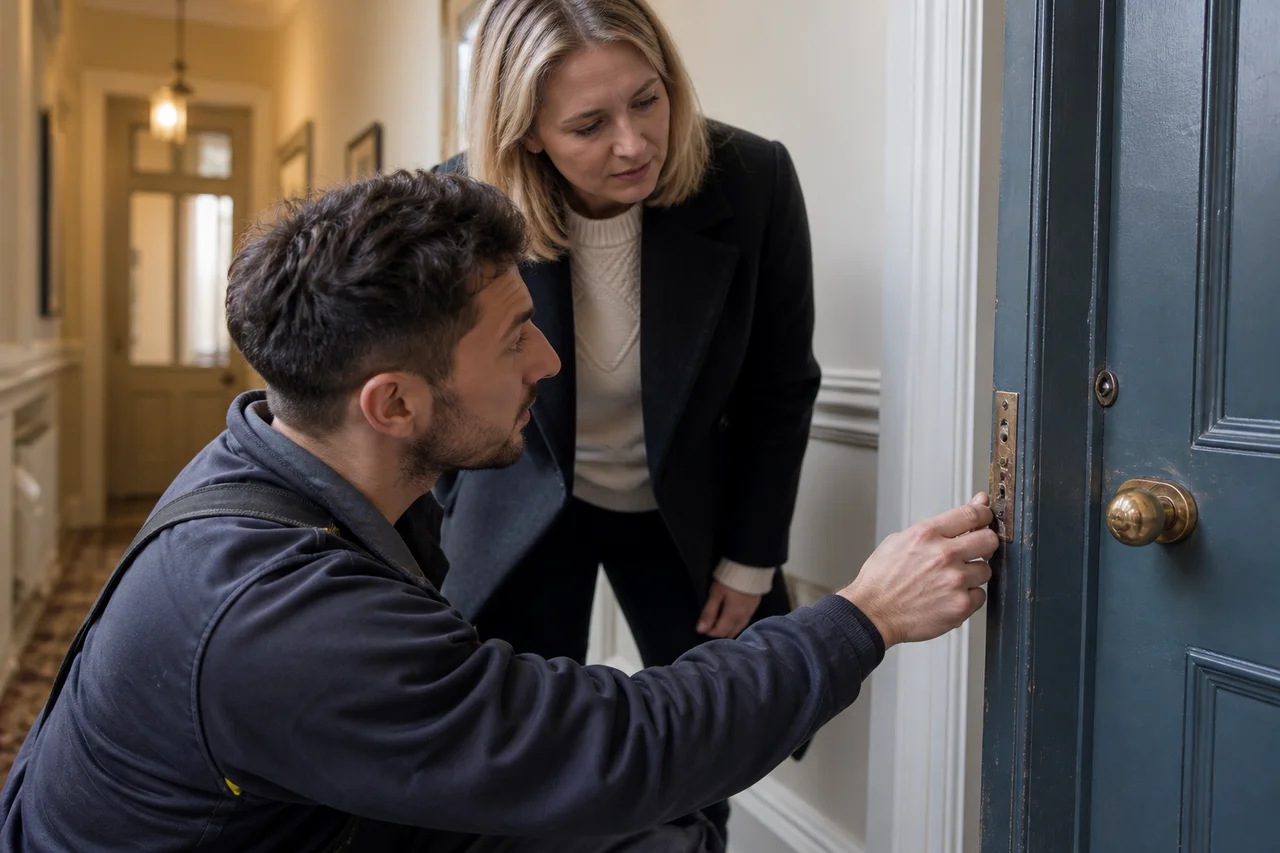
Why a structured maintenance workflow matters
For estate agents, the problem is rarely that a repair is hard to describe. The problem is that it arrives in fragments: a landlord wants a quote, a tenant reports a drip, a contractor needs access, and the office is left trying to decide which issue matters most. A structured workflow prevents those fragments from becoming a chain of missed messages and repeated visits. It gives every request the same basic shape, so the next step is obvious.
That structure is especially useful in void periods, when several minor issues often need dealing with before marketing, viewings or move-in. A loose collection of emails can hide dependencies, such as decorating that should follow a plaster repair, or a fitting that cannot be installed until a broken fixture is made safe. When the request is written well, teams can see what is urgent, what is cosmetic, what needs approval and what evidence should come back at the end.
- Use one request record for related tasks rather than several disconnected messages.
- Separate safety, access and finish quality from the repair itself.
- Make the approval point clear before work begins.
- Treat completion evidence as part of the job, not an optional extra.
What to group together in a single request
The most useful maintenance request is not necessarily the shortest one. It is the one that groups related items in a way that matches how a handyman actually works on site. Minor reactive jobs, fittings, void-period repairs, snagging and decorating touch-ups often sit together because they are small, localised and part of the same property visit. If they are all clearly listed, a contractor can plan tools, materials and sequence without unnecessary back-and-forth.
A sensible grouping might include a loose door handle, a missing blind cord safety cap, a cracked silicone line, a touch-up on a wall scuff and a smoke alarm battery change. Those are different tasks, but they may be best handled in one visit if they are all within the same access window. By contrast, a plumbing leak, a failed appliance and a full redecoration should usually be split out, because they involve different skills, timescales and approval decisions.
- Group by visit efficiency, not by who reported the issue.
- Keep cosmetic touch-ups separate from work that affects safety or function.
- Avoid combining unrelated trades unless the scope is genuinely small and localised.
- Split complex defects into stages when one task depends on another.
The fields every request should carry
An auditable request needs enough detail to answer five questions: what is wrong, where is it, who can get in, how urgent is it, and who can approve work above the agreed limit. If any of those are missing, the office ends up chasing information while the property remains unresolved. A brief but disciplined request form makes the workflow repeatable across different branches and different managers.
The access note deserves particular care. A contractor does not just need an address; they need the route into the property, the name of the contact on the day, any lockbox or key instructions, the working window, and any restrictions on parking, building entry or alarms. Good photos matter for the same reason. They help define the work before anyone travels, and they reduce disputes over whether the job was present, visible or within scope.
- Property address and unit identifier.
- Clear description of each defect or finish issue.
- Photos showing context and close-up detail.
- Priority level and whether the issue blocks use, marketing or move-in.
- Access instructions, contact name and time window.
- Approval limit and the person authorised to exceed it.
- Completion evidence required before sign-off.
How to set priority and approval limits
Priority works best when it is tied to impact rather than emotion. A loose handrail, active leak or unsafe electrical fitting is not handled the same way as a marked skirting board or a tired sealant line. In managed properties, the office should decide whether the issue is safety-related, tenancy-related, void-critical or routine cosmetic work. That classification helps agents keep move-ins on track without overreacting to every small defect.
Approval limits should be practical and known in advance. The person managing the file needs to know what they can authorise without waiting for a landlord response, and where the line sits for anything larger or less obvious. If the limit is not explicit, staff either delay needed work or approve too much by accident. A good workflow also notes the boundary for follow-on decisions, such as whether a repair should be replaced, painted, or left for a later programme of work.
- Use simple categories: urgent, high, routine and cosmetic.
- Tie urgency to property impact, not just to the volume of the complaint.
- Record the approval threshold before the contractor attends.
- Note when a quote is needed for anything outside the initial scope.
How the site visit should run
A good handyman visit begins before arrival. The office should send the request in a clean, readable format so the contractor knows what to expect, what to bring and whether the visit is likely to need more than one task completed in sequence. On site, the operative should check the condition, confirm the scope against the photos and note any hidden issue that changes the plan. That is where the workflow saves time: the person doing the work can match the real-world condition to the request instead of guessing from a vague note.
The visit should also leave a clear trail. If a repair was made, it should be possible to see what was done, what remains unresolved, and whether any further action is recommended. For estate agents, that matters because a property file often passes between colleagues, landlords and contractors. Without a proper handover, a small job can reappear days later because nobody can tell whether it was finished, deferred or only partially addressed.
- Confirm scope against photos before starting work.
- Log any hidden defect or additional risk separately.
- Record materials used or items replaced when relevant.
- Capture after photos from the same angle where possible.
- State clearly if follow-on work is needed.
Common workflow mistakes and how to avoid them
One common mistake is treating every issue as if it can be solved in the same way. That leads to office staff bundling together work that ought to be separated, or splitting out jobs that could have been resolved in one visit. Another mistake is relying on memory or informal chat instead of a written request with photos and access details. The result is predictable: repeated questions, wasted journeys and arguments over what was agreed.
A third failure mode is sending a request without a clear completion standard. If the brief says only that something needs to be ‘looked at’, the contractor may inspect rather than repair, or repair only the visible problem while leaving the underlying cause unresolved. The better approach is to define the expected outcome in plain language. For example, say whether a fitting should be made safe, a surface made good, a seal renewed or a touch-up completed to a reasonable finish.
- Do not send open-ended instructions like “please sort”.
- Do not rely on memory for access or approval details.
- Do not mix inspection-only tasks with repair-only tasks unless the distinction is stated.
- Do not sign off a job without evidence of what was completed.
How this supports estate agent and property manager work
For a handyman for estate agents, the value is not only the repair itself. It is the reduction in coordination effort around the repair. A well-structured request helps branch teams manage property maintenance in London, arrange letting agent maintenance in Birmingham, and handle rental property repairs in Manchester without rewriting the same information in different formats. The same logic applies in Liverpool and elsewhere in the United Kingdom market boundary provided: the workflow should stay consistent even when the property mix changes.
This is also where internal discipline matters. A request can be forwarded to a property maintenance team, a handyman service or a broader management workflow without losing the original brief. For readers who need the service scope or publication controls that sit behind this guidance, the relevant internal references are [Property maintenance](/uk/services/property-maintenance), [Handyman services](/uk/services/handyman), [UK services](/uk/services), and the [Perfect Living editorial policy](/insights/editorial-policy). The point is not to overcomplicate the process, but to make sure the office can act on it reliably.
- Keep one standard request format across branches and property types.
- Use the same evidence standard whether the issue is void, reactive or cosmetic.
- Link the request back to the property record so it can be audited later.
- Avoid changing the workflow every time a different colleague handles the file.
Practical decision and implementation checklist
Before sending a request, the office should be able to answer the basics without reopening the file. That means the issue has been grouped correctly, the photos show enough context, the access plan is workable, the priority is stated, and the approval limit is visible. If any of those are unclear, the request should be paused and completed properly. Small gaps at the start usually become larger gaps at the end, especially once more than one person has handled the job.
For implementation, the cleanest approach is to use one template for all property maintenance requests and insist that every field is completed before assignment. That template should travel with the job from first report to final sign-off. If a landlord approval is needed, the office should attach the quote or summary, record the response, and keep the completion evidence in the same record. That creates a usable audit trail without slowing down routine work more than necessary.
- Have we grouped only related tasks into one request?
- Do the photos show the issue clearly and from the right angle?
- Is access written down, including the contact, window and entry method?
- Is the priority based on property impact?
- Is the approval limit stated before work starts?
- Will the contractor know what completion evidence is expected?
- Has the file been updated with after photos or a clear completion note?
Sources and notes
- Perfect Living UK property maintenance First-party property-service scope and operating boundaries.
- Perfect Living editorial policy Evidence and publication controls.