
Handyman · 9 min read
How to mount a TV safely on a wall
A practical UK guide to TV wall mounting: wall types, fixings, cable safety, height, tools and when to use a professional.
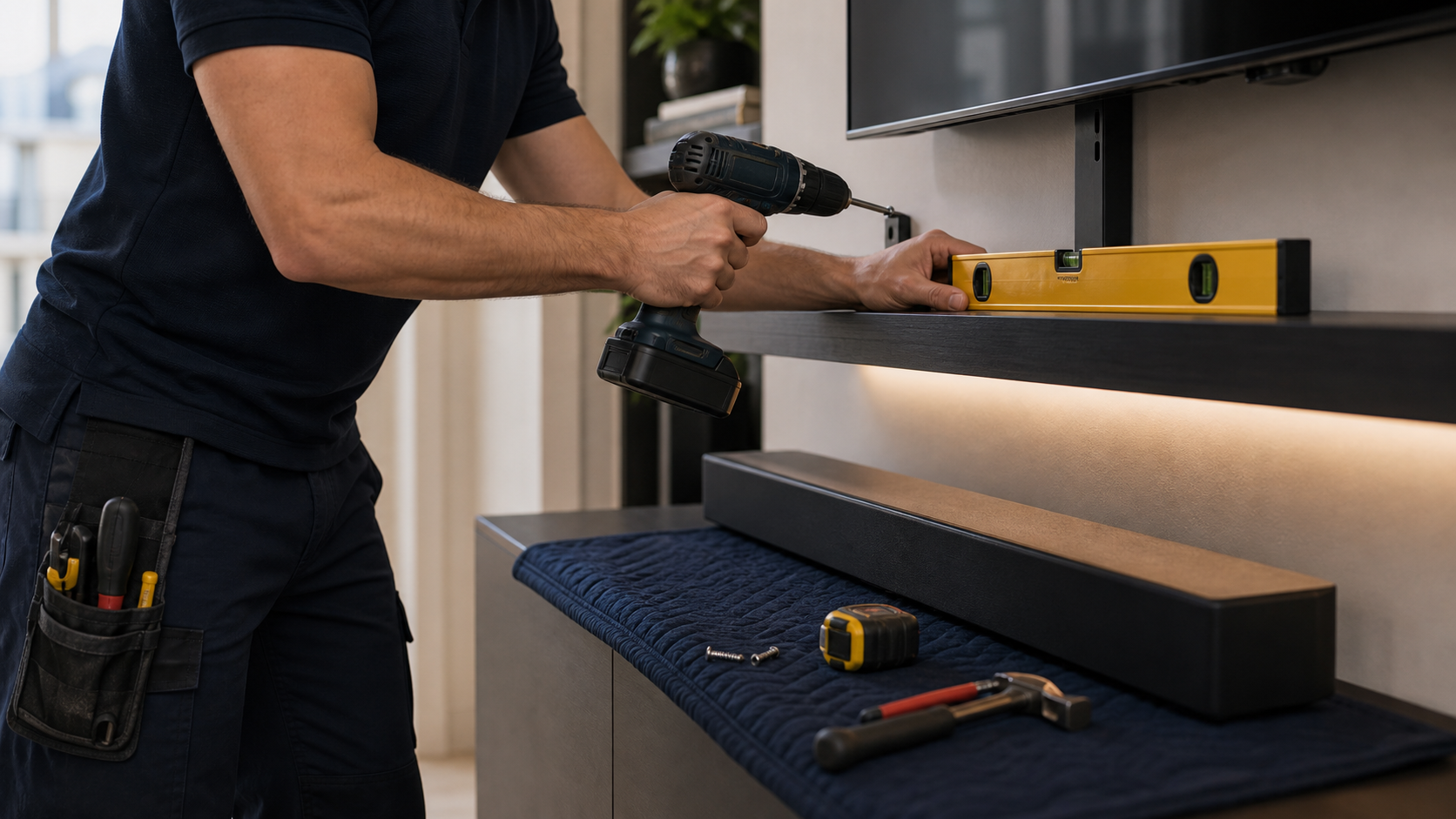
Before you start
Understand the job before you touch the tools.
DIY is possible on simple solid walls if you have the right drill, fixings and confidence.
Use a professional for plasterboard, chimney breasts, expensive screens, concealed cables, uneven walls, large TVs or uncertain fixings.
Tools and materials
What you need before you start.
Required skills Wall identificationMeasuringDrillingFixing selection Tools required Stud detectorDrillLevelTape measureSocket setPencil Materials required TV bracketCorrect fixings for wall typeCable trunking if needed Safety and UK regulations
Read this before touching the job.
Step by step
How an experienced tradesperson would think through it.
Check TV weight and bracket compatibility.
Why it matters: this stage reduces mistakes before they become expensive. Work slowly, check the result, and do not move to the next step until the area is safe and understood.
Decide height from the seated viewing position, not just from standing eye level.
Why it matters: this stage reduces mistakes before they become expensive. Work slowly, check the result, and do not move to the next step until the area is safe and understood.
Identify wall type: solid masonry, stud wall, dot-and-dab or plasterboard system.
Why it matters: this stage reduces mistakes before they become expensive. Work slowly, check the result, and do not move to the next step until the area is safe and understood.
Scan for cables and pipes before drilling.
Why it matters: this stage reduces mistakes before they become expensive. Work slowly, check the result, and do not move to the next step until the area is safe and understood.
Mark bracket holes with a level.
Why it matters: this stage reduces mistakes before they become expensive. Work slowly, check the result, and do not move to the next step until the area is safe and understood.
Drill using the correct bit and depth for the fixing.
Why it matters: this stage reduces mistakes before they become expensive. Work slowly, check the result, and do not move to the next step until the area is safe and understood.
Tighten the bracket securely and hang the TV with help.
Why it matters: this stage reduces mistakes before they become expensive. Work slowly, check the result, and do not move to the next step until the area is safe and understood.
Check level and cable strain before letting go.
Why it matters: this stage reduces mistakes before they become expensive. Work slowly, check the result, and do not move to the next step until the area is safe and understood.
Technical note
The part homeowners usually misunderstand.
Electrical work for new sockets or concealed cabling may require a competent electrician.
Do not run standard power cables inside walls unless the installation is designed for it.
Identify the material, check access, test a small area, stop if safety or regulation risk appears.
Before and after
What a good result should change.
The job starts by understanding what is actually wrong.
The result should solve the problem without creating a new one.
Cost guide
What it usually costs.
Check bracket tightness after a few days and avoid pulling cables or moving articulated arms aggressively.
Troubleshooting
If it does not go to plan.
Printable checklist
Before you start, check these items.
Check bracket tightness after a few days and avoid pulling cables or moving articulated arms aggressively.
Questions
Frequently asked questions.
Can I mount a TV on plasterboard?
Sometimes, but wall construction and load rating matter. If unsure, use a professional.
Can power cables go inside the wall?
Not standard loose power leads. Electrical work and suitable cable routes need competent installation.
What height should a TV be?
Usually close to seated eye level, adjusted for room layout and TV size.
Related articles
Keep learning before you start.

Soft CTA
Want it handled by Perfect Living?
Open the handyman service page or send photos, postcode and preferred timing.
